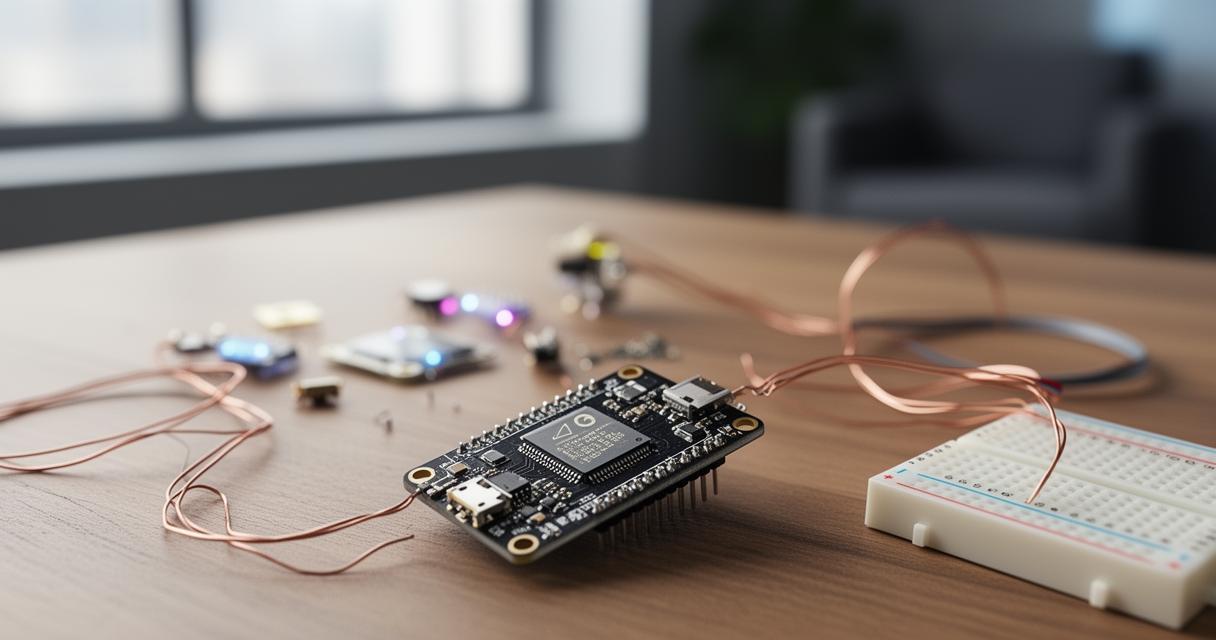
The world of computer graphics has always been shaped by a constant tug of war between speed and realism, and Intel has thrown a rather compelling punch into that fight with its Embree technology. Rather than relying purely on marketing hype, the chipmaker has quietly built a high performance ray tracing library that now underpins some genuinely impressive results on its Arc GPUs, prompting many in the industry to reconsider who leads the pack when it comes to lifelike rendering.
Key points
- Intel's Embree is a high-performance, open-source ray tracing library designed to provide efficient rendering across both CPUs and Intel Arc GPUs.
- The Embree API is built for easy integration, allowing developers to implement hardware-accelerated ray tracing without rebuilding their entire existing production pipelines.
- The library excels in photorealistic rendering by handling complex tasks like multi-level instancing, dynamic scenes, and hair geometry with high precision.
- By offering SYCL support, Embree enables cross-platform GPU programming, allowing a single C++ codebase to run efficiently on different operating systems and hardware configurations.
- Intel Arc GPUs have demonstrated competitive performance-to-cost ratios in industry benchmarks like Blender, challenging established players like NVIDIA in specific professional workloads.
- While Intel's technology is technically impressive, users must still consider the ongoing gaps in software ecosystem maturity and driver stability compared to more established competitors.
Intel's embree technology: a game-changer in ray tracing performance
Understanding embree's core architecture and rendering capabilities
Intel Embree is a high performance ray tracing library that Intel has developed specifically to support both x86 and ARM CPUs across Linux, macOS, and Windows, as well as Intel's own GPUs. What makes it particularly appealing to developers is that it's released as open source software under the Apache 2.0 Licence, meaning studios and independent creators alike can inspect, adapt, and build upon it without licensing headaches. The current release, version 4.4.1, brings with it support for Intel Core Ultra series 3 integrated GPUs, alongside a raft of specialisation constants added for curves, motion blur, and instances. It's a technical detail, admittedly, but one that translates into tangible improvements for anyone working with complex animated scenes.
The architecture itself is designed around an easy to use API that allows rendering applications to simply swap out their existing ray tracing operations for Embree's own, hardware-accelerated approach. This means studios don't need to rebuild their entire pipeline from scratch, which has proven to be a significant draw for teams already invested in existing workflow compatibility across their tools.

How embree optimises photorealistic graphics rendering
What truly sets Embree apart is its focus on production rendering and photo-realistic rendering applications rather than just quick previews. The library supports advanced features including multi-level instancing, dynamic scene support built on morton code algorithms, and even sophisticated hair geometry rendering, which has historically been one of the trickiest challenges in computer graphics. Intel's engineering team behind this work was recognised with a Scientific & Technical Achievement Award for their innovation in geometric rendering, a nod that speaks volumes about the seriousness with which the industry has taken this project.
Additionally, Embree now offers SYCL support, enabling straightforward GPU programming through a single renderer written in C++. This cross-platform support means the same codebase can run efficiently whether it's deployed on a workstation running Windows or a Linux-based render farm, which is no small feat given how fragmented the graphics software landscape can be.
Competitive analysis: intel's ray tracing against nvidia's geforce rtx series
Performance benchmarks between intel and nvidia graphics solutions
Benchmark discussions following the upgrade, which was posted on the fourth of August 2023, showed encouraging results in Blender 3.6, with users noting a genuine performance improvement on Arc GPUs. Naturally, comparisons with NVIDIA's GeForce RTX series and the broader Nvidia comparison conversation were quick to follow. Some users testing software like Unreal Engine and Stable Diffusion XL reported that Arc GPUs held their own surprisingly well, though concerns lingered over limited compatibility and reduced software support when set against NVIDIA's more mature ecosystem.
It's worth remembering that Intel Arc remains, in many respects, a first-generation product, and that label carries certain caveats. Reports from users who switched to Intel's A770 GPU often praised a stronger performance-to-cost ratio than what they experienced with equivalent AMD comparison models, though driver issues occasionally surfaced as a point of frustration. The open-source drivers are frequently cited as a genuine advantage, alongside anticipated features such as memory pooling, which many hope will further close the gap with established competitors.

Pat Gelsinger's Vision for Intel's Position in the Graphics Market
Under the leadership of Pat Gelsinger, Intel has been vocal about its ambitions to reshape perceptions of the company within the graphics space. His emphasis on innovation isn't just corporate rhetoric; it reflects a broader strategy where Embree acts as a technical proof point, demonstrating that Intel GPUs can genuinely compete rather than simply exist as a budget alternative. There's a clear sentiment among users, some drawn by high prices elsewhere, that switching away from Nvidia is worth considering, provided the functionality holds up under real workloads.
Real-World Applications: Embree's Impact on Content Creation and Visual Computing

Realistic image generation for professional video production
For content creators working on video production, the appeal of ray tracing lies in its ability to generate startlingly realistic images without the laborious workarounds traditionally required in rasterised rendering. Embree's support for motion blur and multi-level instancing makes it particularly useful for animated sequences and visual effects work, where subtle lighting and shadow behaviour can make or break the illusion of realism. Combined with OSPRay, Intel's broader visualisation toolkit, Embree forms part of a wider ecosystem aimed squarely at professionals who need both speed and fidelity.
Intel's Strategic Positioning in the Evolving Graphics Cards Landscape
Despite the encouraging progress, prospective buyers are generally advised to research whether Arc GPUs genuinely meet their specific workflow needs before purchasing, given the ongoing gaps in software compatibility compared to more established players. Still, with detailed API documentation, an active gallery of examples, and continued investment in cross-platform support, Intel appears determined to carve out a lasting place in the graphics cards market. Whether that ambition fully materialises remains to be seen, but Embree has certainly given the company a credible foothold in a conversation it was, until recently, largely excluded from.